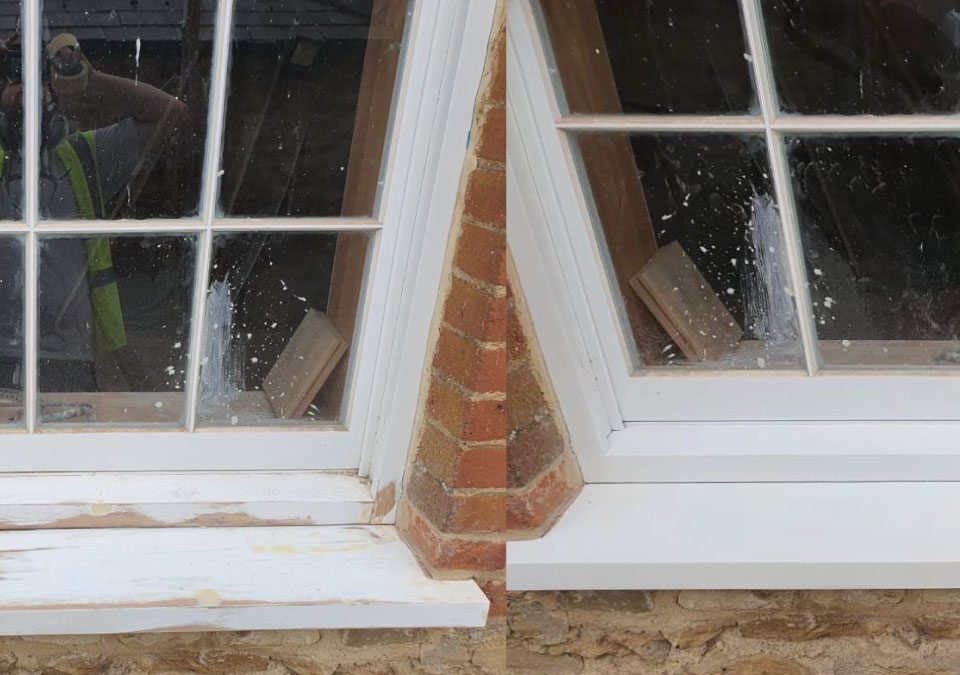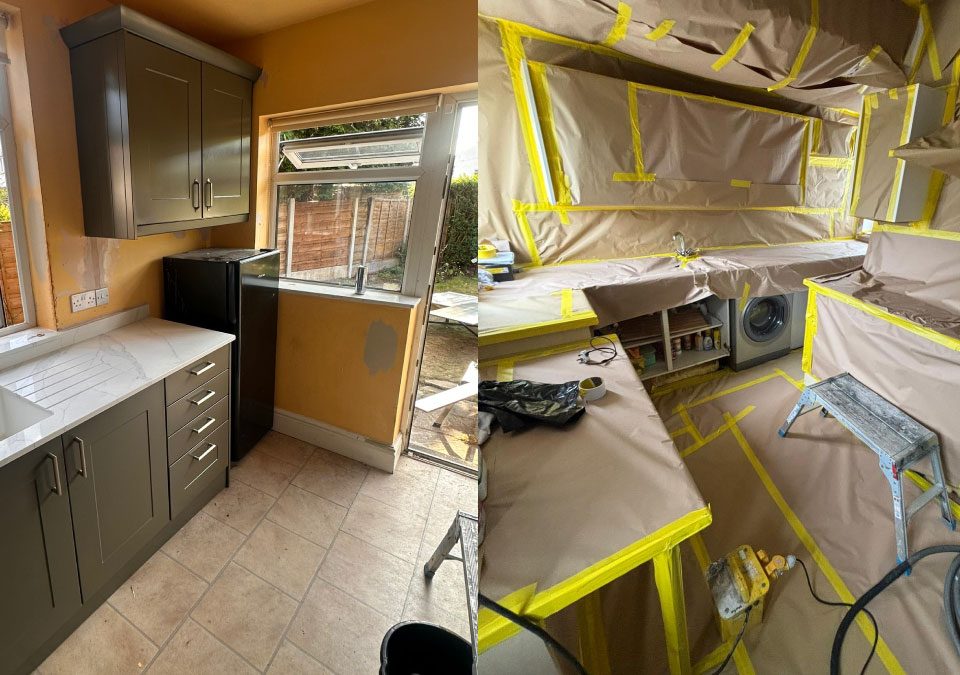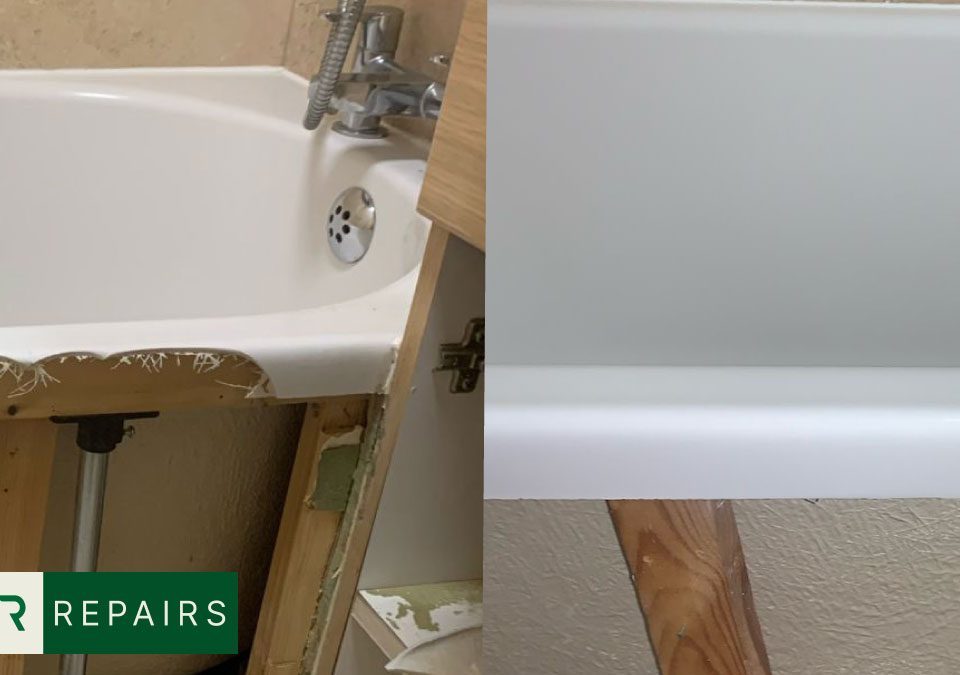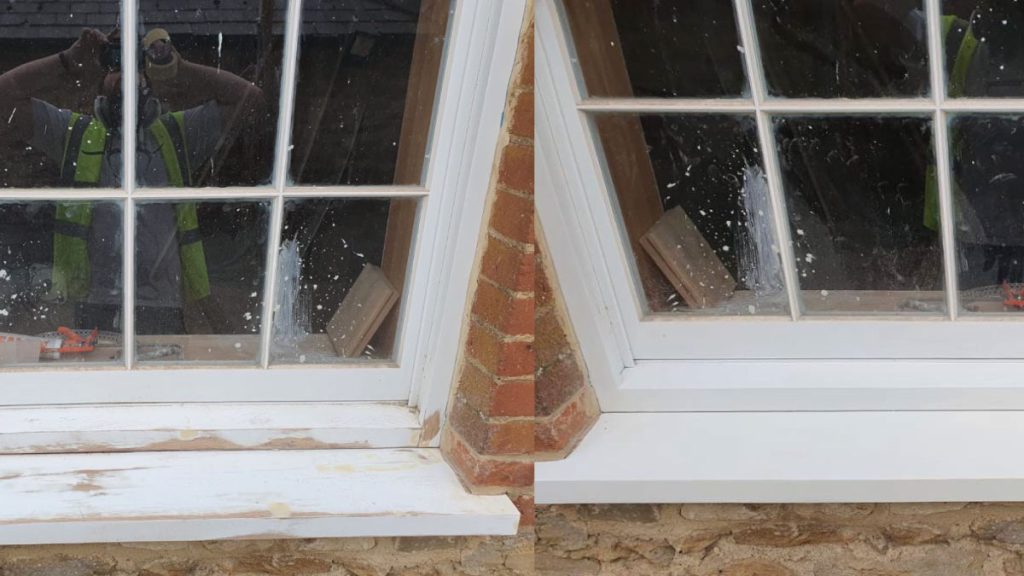
That scratch on your kitchen worktop is bothering you. Before you panic-buy repair kits or call an expensive specialist, run your fingernail across it. Does it catch? That simple test tells you more about your repair options than most articles will admit.
We repair scratched surfaces every day across Manchester properties. Worktops, furniture, floors, doors, and window frames. The question we hear most isn’t “can you fix this?” It’s “could I have fixed this myself?”
Sometimes yes. Often no. The difference comes down to understanding what you’re actually dealing with.
The fingernail test explained
Surface-level scratches feel smooth when you run your nail across them. Your nail glides over without catching. These affect only the finish layer, the protective coating on top of the material. They’re annoying but relatively simple to address.
Mid-depth scratches catch your nail slightly. You feel a small snag, but the scratch isn’t deep. These have cut through the finish and into the colour layer or substrate below. They need more than just polishing.
Deep scratches catch your nail significantly. You can feel a distinct groove. These have penetrated multiple layers and often expose raw material underneath. Professional repair becomes necessary.
This test works on wood, laminate, UPVC, painted surfaces, and most materials with layered finishes. It doesn’t work well on glass or stone where there’s no finish layer to distinguish from the base material.
Surface scratch repair comparison
| Material | Damage Level | Methods | Cost / Duration | Effectiveness |
| Wood Furniture | Surface | • Furniture polish or paste wax• Scratch cover markers• Fine steel wool (0000) with oil | Minimal costMinutes to apply | EffectiveLasts weeks-months |
| Mid-Depth | • Wood filler pencils/putty• Sand with 220 then 400 grit• Apply stain and finish | £10-£30 DIYSeveral hours | EffectiveRequires skill | |
| Deep Gouges | • Two-part wood filler• Multiple applications• Extensive refinishing | £40-£120 Pro4-6 hours over 2 days | Pro RecommendedComplex repair | |
| Laminate | Surface | • Laminate repair paste• Apply with fingertip, buff dry• Test colour match first | £5-£15 DIY15-30 minutes | TemporaryLasts 6-12 months |
| Mid-Deep | • Heat-activated sticks• Specialist colour mixing• Pattern matching required | £50-£150 Pro1-2 hours | Pro RequiredDIY rarely invisible | |
| Glass | Very Fine | • Glass polishing compound• Cerium oxide with rotary tool• Flat glass only | £20-£40 DIY2-4 hours | High SkillCan worsen if done wrong |
| Deeper | • Professional polishing only• Often requires replacement | £80-£200 Pro | ReplaceMore cost-effective | |
| Stone/Composite | Surface | • Diamond polishing pads• Progressive grits: 400-3000• Orbital polisher required | £40-£60/day hire3-6 hours | Equipment NeededSpecialist tools |
| Mid-Deep | • Colour-matched resin• UV-cured compounds• Grinding and repolishing | £100-£300 Pro2-4 hours | Pro OnlyUV equipment needed | |
| UPVC | Surface | • UPVC restorer products• T-Cut or mild abrasive | £5-£20 DIY30-60 minutes | TemporaryPlastic degrades over time |
| Mid-Depth | • UPVC repair compounds• Smooth with abrasive pads• Apply UV protector coating | £60-£150 Pro1-2 hours per frame | Good ResultsColour matching needed | |
| Deep | • UPVC welding techniques• Full frame resurfacing | £150-£300 Pro | Full ResurfaceComplete treatment best |
All costs reflect UK market rates ( 2025). Information verified against professional sources.
When DIY is worth it
Three factors determine whether self-repair is worth attempting.
● Your skill level
Someone who refinishes furniture regularly will handle wood scratch repair well. The same person might struggle with laminate or glass. Be honest about your experience with the specific material.
● Tool and product availability
Many repairs need specific compounds, grits, or applicators. Buying everything for a one-off repair often costs more than professional service. We see many customers who spent £40 to £60 on products that didn’t work, then paid us £80 to fix both the original scratch and their failed repair attempt.
● Location and visibility
A scratch inside a cupboard just needs to be sealed, not invisible. Damage to a kitchen worktop that everyone sees requires professional results. Match your repair approach to the visibility.
Common mistakes that make scratches worse
We fix many failed DIY repairs. Here are the mistakes we see repeatedly.
● Using car scratch remover on furniture or worktops damages the finish.
Car products contain aggressive abrasives designed for automotive paint. They’re too harsh for most furniture finishes.
● Sanding too aggressively creates hollows around scratches.
Light pressure with fine-grit paper gradually reduces scratch depth. Heavy pressure with coarse grit removes too much material, leaving dips.
● Applying finish without proper cleaning traps dirt permanently.
Dust, grease, or polish residue under new finish creates cloudiness and bumps. The repair looks worse than the original scratch. Thorough cleaning with white spirit or methylated spirit before refinishing prevents this.
● Mixing incompatible products causes finish failure.
Oil-based products don’t work over water-based finishes. Wax prevents proper adhesion of anything applied over it. Always check product compatibility or strip back to bare material.
● Attempting colour matching without testing produces obvious patches.
Wood stains and touch-up pens vary significantly between brands and batches. Test in hidden areas first. We keep libraries of colours for different wood species and laminate patterns. Matching from scratch takes years of experience.
● Over-polishing glass creates permanent distortion.
Glass polishing removes material. Too much creates a depression that distorts light passing through. This can’t be reversed. Leave glass repair to specialists with proper equipment.
Manchester surface scratch repair coverage
We cover all Manchester areas and the wider North West. From city centre apartments to suburban homes in Altrincham, commercial properties in Salford to student accommodation in Fallowfield.
Response times depend on urgency. Emergency repairs for properties going on market or commercial spaces opening soon get priority scheduling. Standard repairs typically take 3 to 5 working days from initial contact.
Our technicians hold CSCS cards and work to insurance requirements for commercial sites. We’re accredited with CHAS and ConstructionLine Gold. Full insurance coverage on all work.
Preventing future scratches
Here’s what actually works based on surface type.
● Worktop protection requires daily attention.
Use boards for cutting and hot pads for pans. Even heat-resistant surfaces benefit from this. Wipe spills immediately, especially acids like lemon juice or vinegar on stone.
● Furniture maintenance prevents most scratches.
Felt pads under furniture legs prevent scratching when moving objects. Placemats protect dining tables. Furniture wax or polish provides a sacrificial layer that absorbs minor abrasion. Reapply every 3 to 6 months.
● UPVC needs regular cleaning with appropriate products.
Avoid abrasive cleaners or scouring pads. Use UPVC-specific cleaner or diluted washing-up liquid. Apply protector coating annually. This provides UV resistance and makes future cleaning easier.
● Glass surfaces need microfiber cloths only.
Paper towels contain wood fibres that can cause fine scratches over time. Spray cleaner onto a cloth, not directly onto glass. This prevents drips that dry into marks requiring abrasive removal.
● Floor protection requires appropriate furniture feet.
Hard plastic or metal feet scratch floors. Fit felt pads or rubber cups under all furniture legs. Replace worn pads immediately. Sweep or vacuum before mopping to remove grit that acts like sandpaper.
Getting scratches assessed
Before spending time or money on repairs, get a proper assessment. We offer free evaluation of surface damage across Manchester.
Send us photos of the scratch and the surrounding area. Include close-ups that show depth, and a wider shot that shows the location. We’ll tell you whether repair is viable, approximately what it costs, and honestly, whether DIY works for your situation.
Most scratches look worse to owners than to visitors. We see many where the best advice is “stop stressing about it, nobody else notices.” This saves you money and worry.
For damage that does need attention, we explain options. Sometimes repairs work. Sometimes, touch-up is good enough. Occasionally, replacement is worth it. The right answer depends on your specific situation.
Call us on 0161 2416888 or email sales@mcrrepairs.co.uk with photos. We’ll get back to you within 24 hours with an honest assessment and clear pricing on whether the repair is worthwhile.
Your scratched surface might be simpler than you think. Or it might need professional attention to avoid making it worse. Either way, proper assessment costs nothing and saves mistakes.